Under the Portal: Santa Fe’s Living Marketplace
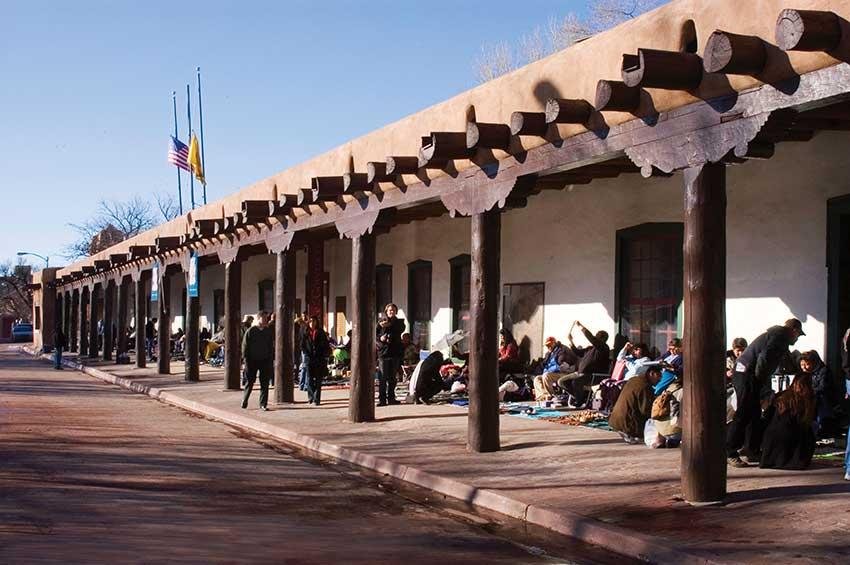
If you find yourself lingering along the shaded walkway of the Palace of the Governors, you’re not alone. The line of Native artists selling jewelry, pottery, carvings, and textiles beneath its long adobe portal is one of Santa Fe’s most photographed—and most quietly remarkable—traditions.
At first glance, it feels timeless. In a way, it is.
For centuries, the Santa Fe Plaza has been a place of exchange, where Pueblo peoples, Spanish settlers, and traders from across the region gathered to buy, sell, and connect. The portal itself—built in the early 1600s—naturally became a place to conduct business out of the high desert sun.
But the scene you see today is not just tradition—it’s also intention.
In the early 20th century, as Santa Fe began to promote its cultural identity, Native artists were encouraged to sell their work here. By the 1970s, concerns about authenticity and fairness led the Museum of New Mexico to formally restrict the space to Native American artisans. Soon after, the artists themselves helped shape the rules that still guide the marketplace today.
What does that mean for a visitor?
Quite a lot. Every piece you see under the portal must be handmade by the artist or their family. Vendors must be enrolled members of recognized tribes or pueblos. A committee of the artists themselves helps ensure quality and authenticity, and even determines who gets a space each day through a rotating system.
In other words, this isn’t a casual souvenir market—it’s a carefully stewarded cultural space.
And that’s part of its quiet magic. When you stop to admire a strand of turquoise beads or a hand-coiled pot, you’re not just browsing—you’re meeting the maker. You can ask where the stone came from, how the design was learned, what traditions it carries forward.
So take your time under the portal. Ask questions. Listen to stories.
Because here in Santa Fe, commerce isn’t just a transaction—it’s a conversation that’s been going on for hundreds of years.