When Santa Fe Walls Stopped Breathing
Stand in front of almost any old building in Santa Fe and you’re looking at a bit of quiet drama—because those walls were never meant to wear what they’re wearing now.
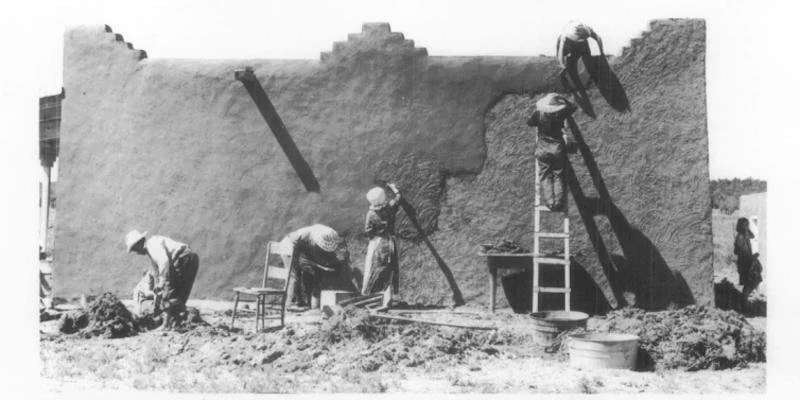
For centuries, adobe buildings were coated with mud plaster, the same humble earth as the bricks themselves. It cracked, it washed away, and every year or so it was patched and renewed. That wasn’t a flaw—it was the system. Adobe walls need to “breathe,” taking in and releasing moisture with the seasons.
Then the railroad arrived in the late 1800s, bringing Portland cement along with it. Suddenly there was a tougher, longer-lasting option: cement stucco. No more annual replastering. No more mess. It must have felt like a miracle.
It wasn’t.
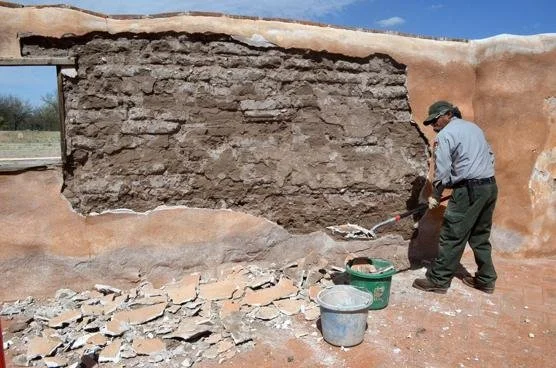
Cement stucco is hard and relatively waterproof. Put it over soft, porous adobe, and you create a problem. Moisture gets in—but it can’t get out. Over time, walls begin to crumble from within. You’ll sometimes see the results: bulging surfaces, cracks, or that ghostly white powder of trapped salts pushing their way out.
By the early 20th century, during Santa Fe’s great architectural revival—guided by figures like John Gaw Meem—the city leaned hard into its adobe look. Ironically, many buildings wore smooth stucco skins that only imitated traditional forms, while preservationists slowly rediscovered older, more breathable finishes like lime plaster.
So next time you pass a weathered wall, take a closer look. In Santa Fe, even the plaster tells a story—of good intentions, modern shortcuts, and a long lesson in how to build with, rather than against, the desert.