Why Did the Spanish Missionaries Work So Hard to Convert the Pueblo People?
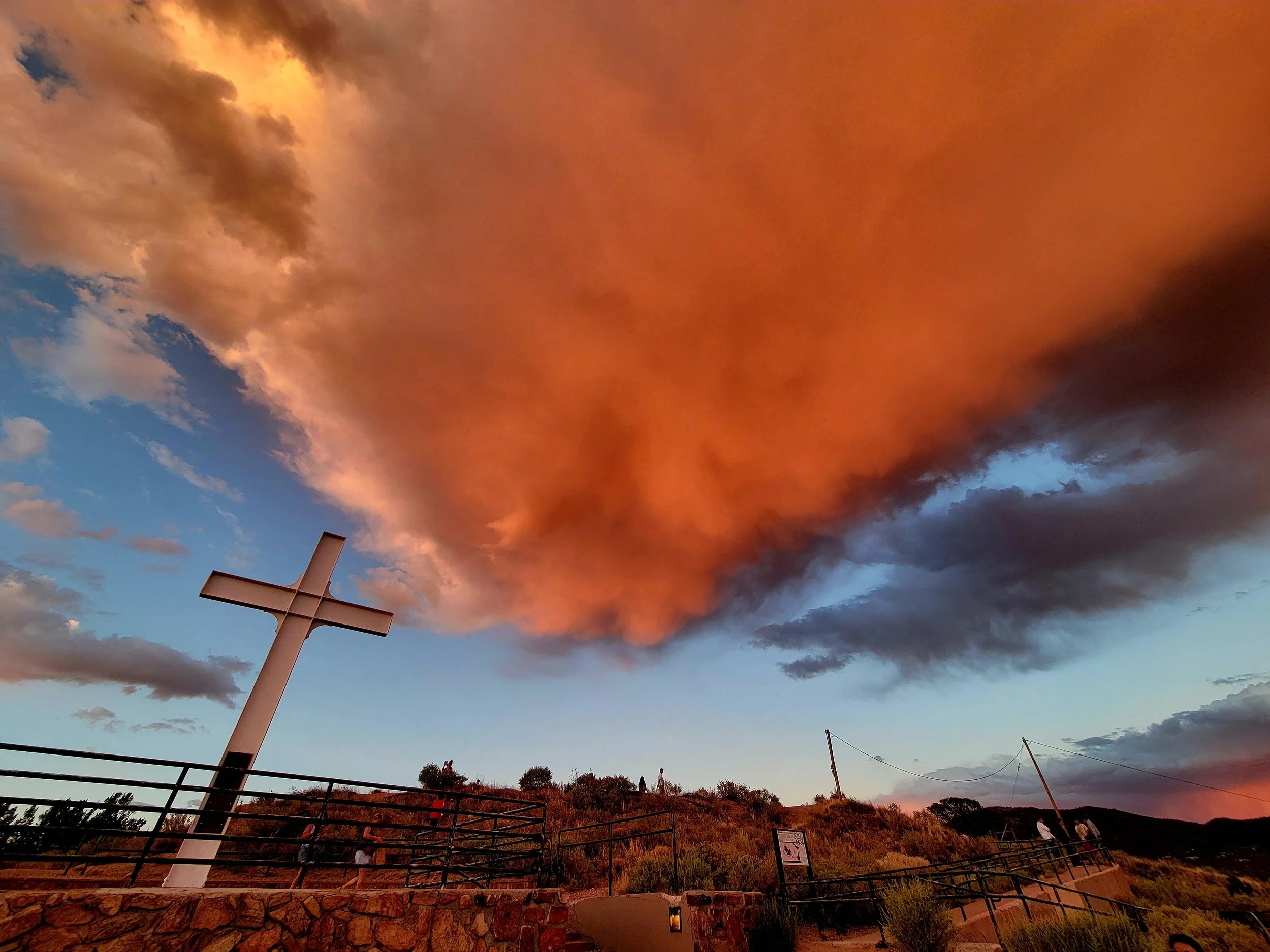
Cross of the Martyrs above Santa Fe
One of the questions I hear from visitors on our Santa Fe History Walk is, Why were the Spanish missionaries so determined to convert the Pueblo people? From a modern perspective, it can seem difficult to understand. Yet the answer helps explain one of the most dramatic events in New Mexico history: the Pueblo Revolt of 1680.
To understand the missionaries, we have to step into the world of seventeenth-century Spain.
The Franciscan friars who accompanied Spanish colonists to New Mexico were not simply representatives of an empire. They were men of deep religious conviction who believed they had been entrusted with a sacred responsibility. To them, Christianity was not one faith among many—it was the revealed truth. They believed every person possessed an immortal soul and that sharing the Gospel was an act of compassion, offering the hope of eternal salvation.
From that perspective, converting Indigenous peoples was not merely desirable; it was a moral obligation.
At the same time, religion and government were closely intertwined. Under an arrangement known as the Patronato Real("Royal Patronage"), the Spanish Crown was granted broad authority over the Church in its American territories. The monarchy agreed to support missionary work, while the Church helped establish communities throughout the expanding Spanish empire. In practice, the goals of evangelization and colonization often became inseparable.
This partnership produced both remarkable achievements and profound tensions.
The missions introduced churches, schools, farming techniques, music, and artistic traditions that continue to shape Santa Fe today. At the same time, many missionaries believed they were called to eliminate Indigenous religious practices. Ceremonies were prohibited, sacred objects destroyed, and traditional beliefs discouraged or punished. While some friars questioned harsh treatment of Native peoples, others accepted coercive measures, believing that temporary suffering could lead to eternal salvation.
To the Pueblo peoples, however, their religious traditions were inseparable from their communities, their ancestors, and the rhythms of the natural world. What the missionaries regarded as salvation, many Pueblo communities experienced as an assault on their identity and way of life.
These conflicting worldviews eventually erupted in the Pueblo Revolt of 1680, one of the most successful Indigenous uprisings in North American history. Spanish settlers and missionaries were driven from New Mexico for more than a decade before Spain reestablished control in 1692.
The revolt remains one of the defining events in Santa Fe's history, yet many visitors have never heard of it before arriving here. Walking through the Plaza today, it's easy to admire the adobe architecture, the cathedral, and the Palace of the Governors without realizing that these streets have witnessed centuries of cooperation, conflict, faith, resilience, and cultural exchange.
History rarely divides neatly into heroes and villains. The Franciscan missionaries were motivated by sincere religious conviction, while the Pueblo people were equally committed to preserving a spiritual tradition that had shaped their communities for centuries. Understanding both perspectives helps us appreciate why New Mexico's history is unlike anywhere else in North America.
Perhaps that is one of the greatest gifts of visiting Santa Fe. Beneath its beauty lies a story that asks us not simply to choose sides, but to understand how deeply held beliefs can shape the course of history—for better and for worse.