A Forest Out of Balance: Why Santa Fe's Watershed Is Being Restored
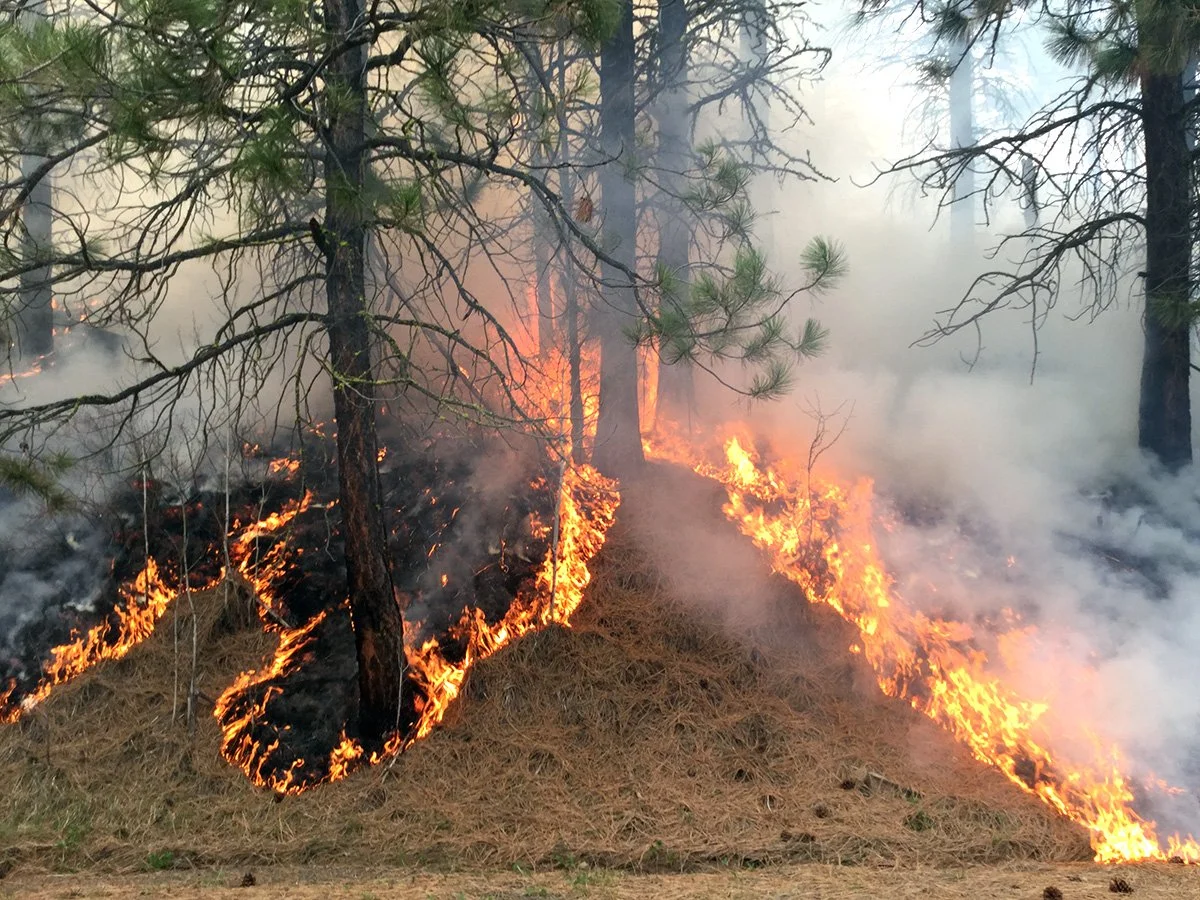
On my recent visit to the Santa Fe Municipal Watershed, I learned something that genuinely surprised me.
Like many people, I assumed that northern New Mexico's forests began changing soon after Spanish settlement in the late 1500s. Livestock arrived. Trees were cut for homes and fuel. Villages expanded. Surely this was when the great ecological transformation began.
The evidence tells a different story.
Our guide, forester Bill Armstrong, showed us a remarkable record assembled from the annual growth rings of ponderosa pines in nearby Frijoles Canyon. Many of these old trees carry blackened scars from fires they survived centuries ago. By studying those scars, scientists can reconstruct the history of wildfire with astonishing precision.
The record stretches back to around the year 1500.
For nearly four centuries, through Pueblo history, the Spanish Colonial period, Mexican independence, and much of the American Territorial era, one pattern remained remarkably consistent. Every few years, low-intensity fires moved quietly across the forest floor. These weren't the towering walls of flame we see on the evening news today. They were gentle surface fires, burning grasses, pine needles, fallen branches, and young saplings while leaving most mature ponderosa pines alive.
The old trees survived dozens of these fires. In fact, they depended on them.
Then, quite suddenly, the record changes.
Around 1886, those frequent fires almost disappear.
The timing is hardly accidental. The arrival of the railroad transformed the Southwest. Large commercial cattle operations expanded dramatically, and heavy grazing removed much of the grass that had carried surface fires through the forest. Not long afterward, the newly established U.S. Forest Service embraced an understandable philosophy for the time: every wildfire should be extinguished as quickly as possible.
Both decisions were made with good intentions.
Neither anticipated what would happen over the next hundred years.
Without frequent ground fires, young trees that once would have been thinned naturally survived in enormous numbers. Needles, branches, and fallen wood accumulated year after year. What had once been an open ponderosa woodland slowly became something very different.
Historically, a healthy ponderosa forest might contain thirty to sixty mature trees per acre, with sunny openings, grasses, and wildflowers between them. In portions of the Santa Fe Watershed today, foresters have measured as many as 680 trees per acre. Most are small, crowded stems competing for water, sunlight, and nutrients.
The forest isn't simply denser.
It has become a different kind of forest.
This helps explain why today's wildfires behave so differently from those of centuries past. Instead of remaining on the ground, flames climb through dense young trees—the "ladder fuels" foresters often talk about—until they reach the canopy. Once there, a surface fire can become a fast-moving crown fire capable of killing nearly every tree across thousands of acres.
For a city that depends on mountain snowmelt for its drinking water, that danger extends far beyond the flames themselves.
After an intense wildfire, summer thunderstorms can wash ash, sediment, and debris into reservoirs, degrading water quality and filling valuable storage with mud. In a landscape like Santa Fe's, protecting forests and protecting drinking water are inseparable goals.
This brings us to a question many people understandably ask.
Why are so many trees being cut in a protected watershed?
At first glance, forest thinning can seem contradictory. If forests are precious, shouldn't we leave them alone?
The answer is that foresters are not trying to create a new forest. They are trying to recover an older one.
The goal is to restore the open character of the historic ponderosa woodland—large, widely spaced trees with enough room for sunlight to reach the forest floor. Once those conditions return, carefully planned prescribed burns can once again play the role they performed naturally for thousands of years, reducing fuels before they accumulate to dangerous levels.
None of this is without controversy.
Northern New Mexico has experienced painful reminders that prescribed fires carry risks. Escaped burns have damaged homes, forests, and livelihoods, leaving understandable skepticism in many communities. Those experiences deserve respect, not dismissal.
Yet the alternative also carries profound risks. Decades of fuel accumulation have created forests that are increasingly vulnerable to the kind of catastrophic fires that threaten entire watersheds.
The difficult question is no longer whether fire will return.
It is whether it returns on our terms or its own.
As I left the watershed, I found myself thinking less about individual trees and more about time. For thousands of years, these forests lived in partnership with frequent, gentle fire. That ancient rhythm continued through centuries of human history and only faltered within the lifetime of our great-grandparents.
In ecological terms, the crisis we face today is surprisingly recent.
Perhaps that realization offers a measure of hope.
If human actions helped interrupt a natural process only a century ago, thoughtful stewardship may yet help restore it. The work will take decades, and there will undoubtedly be difficult conversations along the way. But the objective is not to return the watershed to some imagined wilderness.
It is to help the forest remember how it once lived.