A Walk of Faith and Earth: The Holy Week Pilgrimage to Chimayó
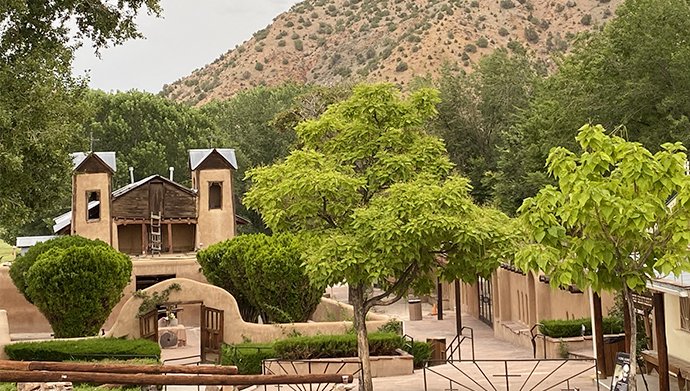
Each spring, as winter loosens its grip on the high desert, Northern New Mexico becomes the setting for one of the most remarkable spiritual journeys in the American Southwest. During Holy Week, thousands of pilgrims make their way on foot to the Santuario de Chimayó, a small adobe chapel nestled in the foothills of the Sangre de Cristo Mountains.
For visitors staying in Santa Fe, this centuries-old tradition offers a powerful glimpse into the region’s deep cultural and spiritual roots. Beginning as early as Good Friday, walkers set out along quiet roads and winding highways, some traveling from Albuquerque, Española, or nearby villages, others coming from much farther away. Many carry crosses, photographs, or tokens of personal significance, their footsteps marking a journey of devotion, reflection, and hope.
The Santuario itself dates to the early 19th century and has long been considered a place of healing. Inside, a small room known as the “pocito” contains sacred earth believed by many to have restorative powers. Pilgrims often gather a small amount of this soil, continuing a tradition that blends Catholic faith with older Indigenous understandings of the land’s spiritual presence.
What makes the pilgrimage especially moving is not only its religious significance, but its communal spirit. Families walk together. Strangers share water and encouragement. Along the roadside, volunteers offer food, drinks, and quiet support. The landscape—wide skies, juniper-dotted hills, and distant mountains—becomes part of the experience, lending both challenge and beauty to the journey.
For travelers, witnessing or respectfully participating in this event can be unforgettable. Even if you don’t walk the full route, visiting Chimayó during Holy Week allows you to observe a living tradition that has endured for generations. It’s a reminder that in Northern New Mexico, history is not confined to museums—it is carried forward, step by step, along the roads that lead to Chimayó.