Red or Green? Even the Cottonwoods Have an Opinion
In New Mexico, it’s the question you can count on: Red or green? Chile, of course—though saying “Christmas” will usually earn you a knowing nod. But step into a Rio Grande bosque in early spring, and you may find that even the cottonwoods have taken sides.
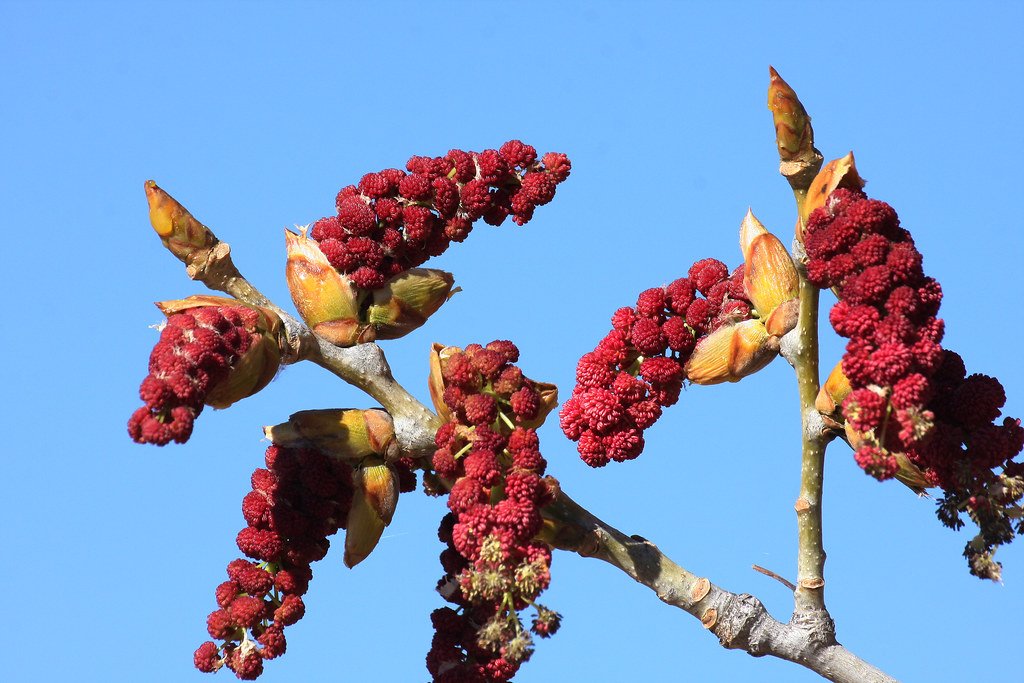
Look up into the branches of a Rio Grande cottonwood (Populus deltoides subsp. wislizeni), and you’ll notice something unexpected. Some trees are hung with dangling clusters of deep purple-red catkins, like strings of tiny lanterns catching the morning light. Others wear softer green catkins, subtle and almost easy to miss unless you know to look.
It turns out this isn’t a matter of mood or soil or sunlight—it’s biology. Cottonwoods are dioecious, meaning each tree is either male or female. The red catkins belong to the male trees, releasing pollen into the spring breeze. The green catkins are found on female trees, which, if successfully pollinated, will later produce those familiar cottony seeds that drift like summer snow.
So there it is: in the bosque, the ancient New Mexican debate plays out in botanical form. Red or green? The trees, it seems, have already decided.
There’s something quietly delightful about this coincidence. As you walk beneath the budding canopy, listening to the rustle of last year’s leaves and the distant flow of the Rio Grande, you’re surrounded by a landscape that feels both deeply rooted and playfully alive. Even the cottonwoods—those enduring guardians of our river valleys—seem to share in the local sense of humor.
This spring, take a moment to look up. The bosque might just ask you a familiar question.