The Hidden Journey of Santa Fe’s Water
It’s one of the defining facts of Santa Fe, though many visitors never realize it: this city of 90,000 people survives on a remarkably fragile and carefully managed water system.
Traditionally, Santa Fe got its water from the high peaks of the Sangre de Cristo Mountains. Snow fell in winter, melted in spring, and flowed down the Santa Fe River into the city’s reservoirs at McClure and Nichols. Even today, that watershed remains enormously important, supplying roughly a third of the city’s drinking water in good years.
That’s why poor snowpack years feel existential here. Santa Fe’s original water source is literally mountain snow.
But modern Santa Fe long ago outgrew what the local watershed alone could provide. By the late 20th century, the city was heavily dependent on groundwater wells, especially the Buckman well field near the Rio Grande northwest of town. During the droughts of the 1990s and early 2000s, officials realized those aquifers were being pumped faster than they could naturally recover.
So Santa Fe turned outward — in one of the most ambitious infrastructure projects in modern New Mexico history.
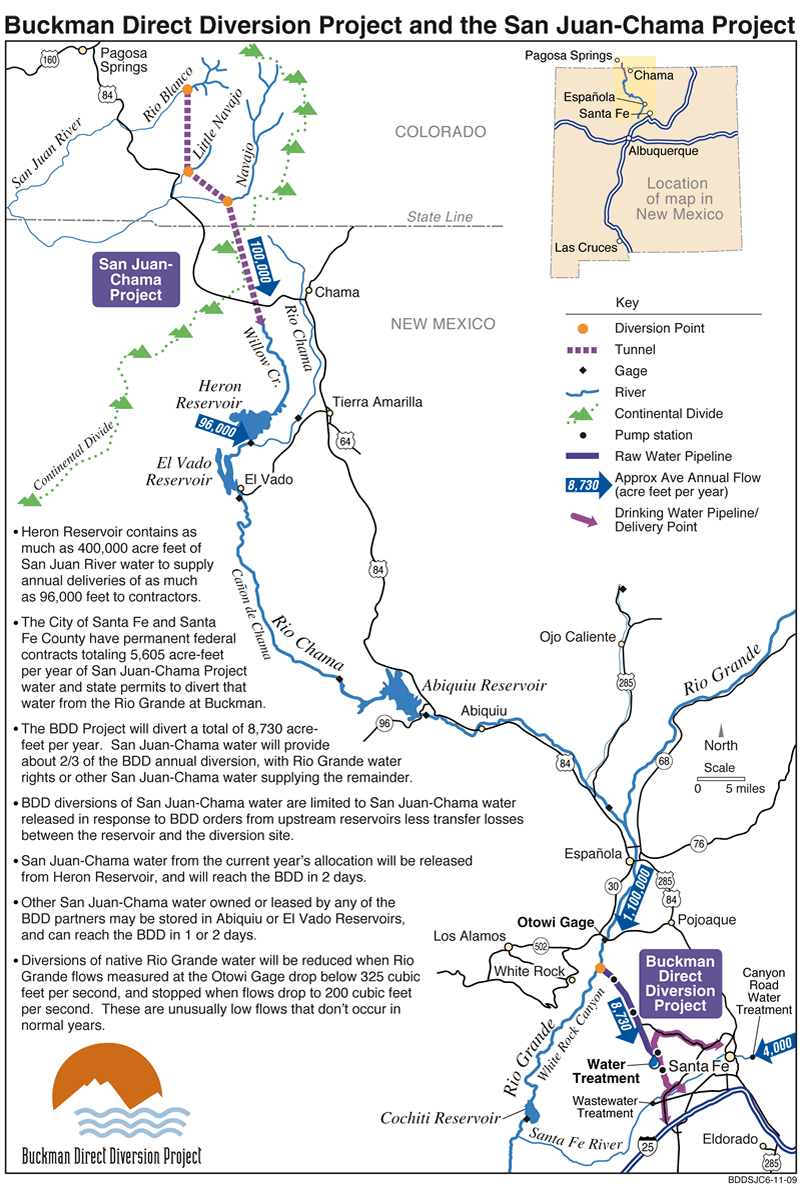
Today, nearly half the city’s water arrives through the Buckman Direct Diversion Project, completed in 2011. Water originating in the San Juan Mountains of southern Colorado is diverted across the Continental Divide through the federal San Juan–Chama Project, stored in reservoirs like Heron and Abiquiu, released into the Rio Grande, then pumped uphill eleven miles and more than a thousand vertical feet to Santa Fe’s treatment plant.
In a strange way, much of Santa Fe’s modern drinking water now begins on the other side of the Continental Divide, in the Colorado River watershed.
And that fact carries its own anxiety. The Colorado River system is itself under historic stress from warming temperatures and declining snowpack.
Which means Santa Fe’s water story has become a layered Southwestern story: local mountain snow, deep fossil groundwater, imported Colorado River water, conservation, reservoirs, acequias, and constant adaptation to drought.
In a wet year, the system feels resilient.
In a year like this one, you can almost hear the desert reminding everyone who is really in charge.