The “Lungers” Who Reinvented Santa Fe
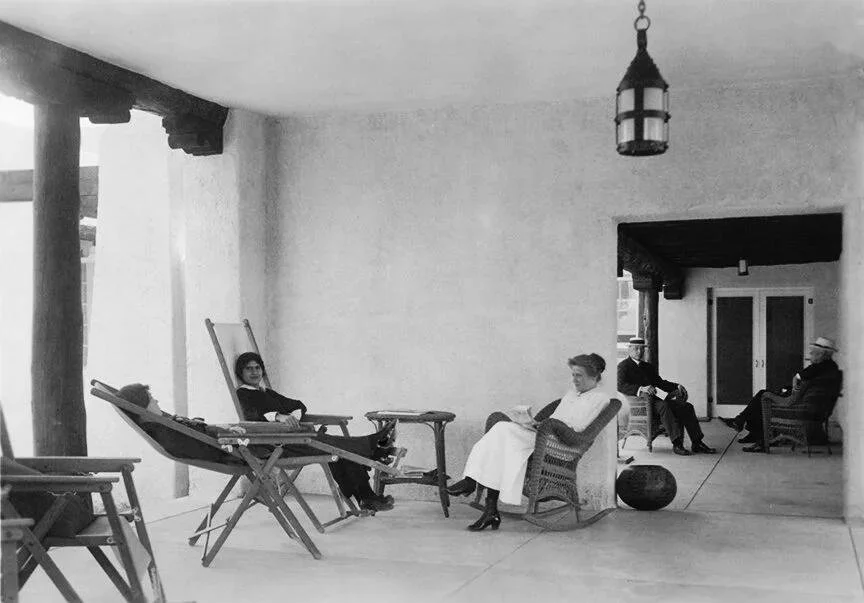
It’s one of Santa Fe’s most surprising origin stories: the city we admire today—its adobe romance, its artistic mystique, its sense of timelessness—was shaped in part by people who came here expecting to die.
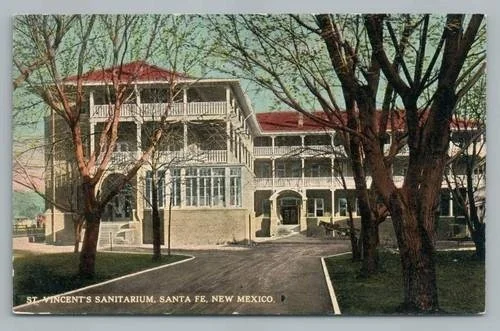
In the late 19th and early 20th centuries, tuberculosis patients—known colloquially as “lungers”—arrived in Santa Fe seeking the healing power of altitude and dry air. Institutions like St. Vincent’s Sanatorium (later Marian Hall) welcomed them, part of a broader regional embrace of health seekers drawn to New Mexico’s climate.
But many of these newcomers didn’t simply recover—or fade away. They stayed. And in staying, they transformed the city.
Take Carlos Vierra, who came west after contracting tuberculosis. He became one of Santa Fe’s first resident artists and a passionate advocate for preserving its historic adobe buildings. At places like Sunmount Sanatorium, he encountered others who would shape the city’s future—including John Gaw Meem, himself a TB patient, who went on to define the Pueblo Revival architectural style that now defines Santa Fe.
These were not isolated figures. Writers like Mary Austin, archaeologists like Edgar L. Hewett, and a wider circle of artists, patrons, and spouses—many touched directly or indirectly by illness—helped spark a cultural reawakening. Together, they championed Indigenous and Spanish traditions at a moment when much of America was rushing toward industrial uniformity.
The result? A deliberate reinvention. By the 1910s and 1920s, Santa Fe began promoting itself not as a modern city, but as a place apart—authentic, handcrafted, and rooted in the past.
So as you walk these streets, past thick adobe walls and quiet courtyards, consider this:
Santa Fe’s signature style wasn’t just preserved—it was reimagined by people who came here chasing a cure, and instead helped create a cultural identity that still draws visitors today.