The Railroad That Named Itself for Santa Fe . . . and Went Somewhere Else
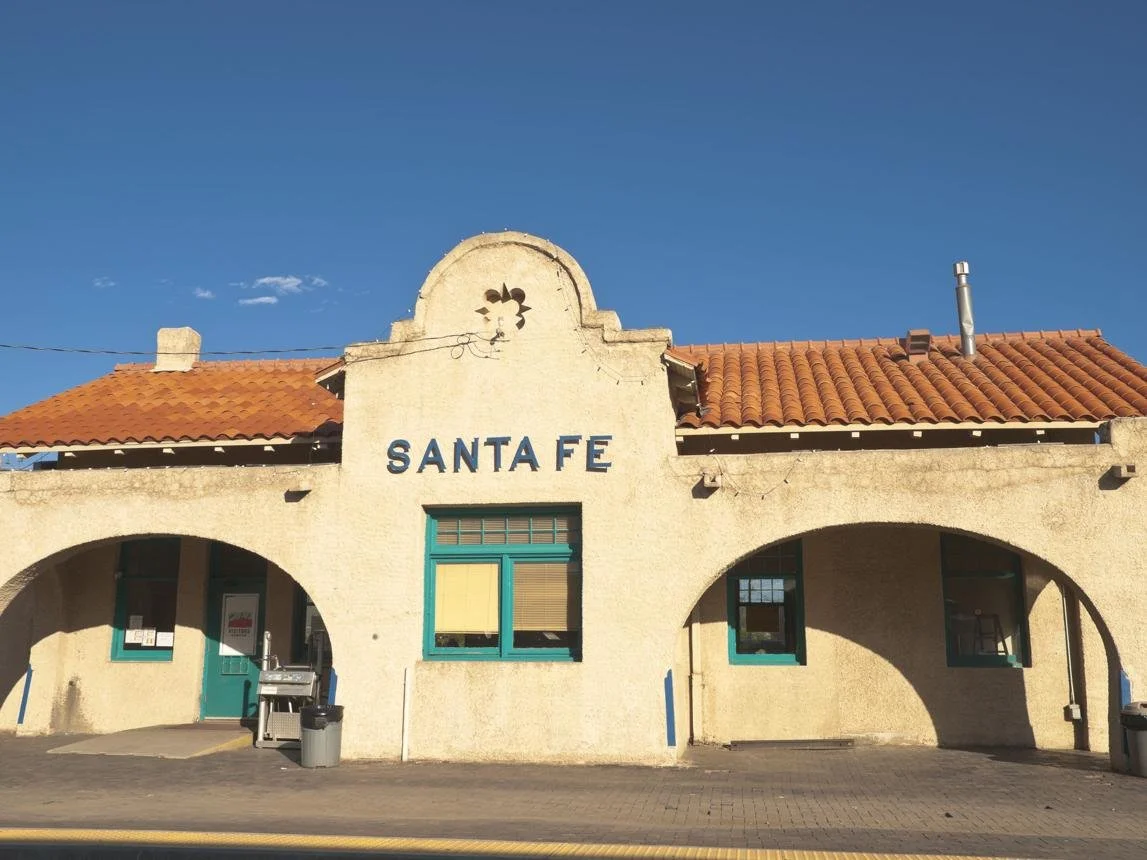
One of the great ironies of New Mexico history is that the famous Santa Fe Railway largely bypassed Santa Fe.
Yes — that Santa Fe Railway.
The railroad that carried the name of the ancient capital across the continent eventually decided that Santa Fe itself was too awkward, too mountainous, and too impractical for the main line west.
Which feels, somehow, deeply Santa Fe.
By the late 1870s, the Atchison, Topeka & Santa Fe Railway was racing westward toward California. The company had adopted the name “Santa Fe” long before it ever reached New Mexico. At the time, Santa Fe still carried enormous symbolic weight. The old Santa Fe Trail ended here. The city represented the romance of the Southwest, Mexican trade, frontier commerce, and the far edge of the American imagination.
But symbolism and railroad engineering are not always compatible things.
The actual city of Santa Fe in 1880 was small, perched high in the foothills at roughly 7,000 feet, and inconveniently tucked away from the easiest transportation corridors. Getting a railroad up from the plains toward Santa Fe was manageable enough through the Galisteo Basin. But getting trains back down toward the Rio Grande Valley and onward to Arizona and California was another matter entirely.
Railroads in the nineteenth century were obsessed with grades. A route that climbed too steeply could slow freight, require extra locomotives, and cost enormous sums forever after. And from the railroad’s perspective, the Rio Grande corridor through Albuquerque simply made more sense: flatter grades, more water, more room for rail yards and shops, and a straighter path west.
So the main line went south.
Santa Fe ended up with a spur line instead, branching off at what became Lamy.
Over the years, all sorts of stories sprang up to explain the “snub.” Some claimed Santa Fe’s leaders were arrogant or indecisive. Others blamed stubborn landowners, political rivalries, or flirtations with the Denver & Rio Grande. There are probably fragments of truth in all of those stories. Frontier railroad negotiations were rarely simple.
But the larger explanation was probably less dramatic and more powerful: Santa Fe was culturally important, but Albuquerque was geographically useful.
And the railroad age rewarded usefulness.
In many ways, modern Albuquerque was built by the railroad. The ATSF established shops, yards, housing, and a new commercial district there, shifting New Mexico’s center of gravity toward the Rio Grande Valley. Meanwhile Santa Fe remained what it had long been: a political capital, a cultural crossroads, and a place slightly apart from the main currents of commerce.
Yet here is the delicious twist.
Although the railroad largely bypassed Santa Fe operationally, it embraced Santa Fe romantically.
The company leaned heavily into Southwestern imagery. Harvey Houses, Pueblo Revival stations, “Indian Detours,” desert colors, adobe aesthetics — all became part of the railroad’s identity. The idea of Santa Fe became one of the great brands of the American West, even if most trains hurried past somewhere to the south.
So perhaps the final irony is this:
The Santa Fe Railway made Santa Fe famous partly because it did not quite belong to the railroad world.
The city remained a little difficult, a little impractical, a little off-axis — and therefore irresistible.
Which may still be the secret of Santa Fe today.