Tracks Through Time: The Reinvention of Santa Fe's Railyard
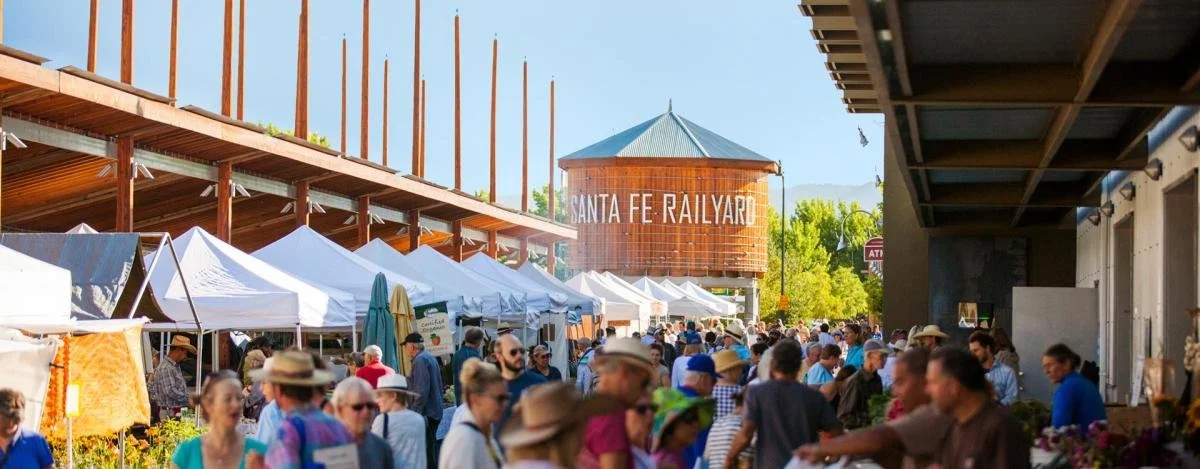
For longtime Santa Fe residents, the transformation of the Santa Fe Railyard has been one of the city's most remarkable stories. When many of us arrived in the 1990s, the old rail yards were largely an underused industrial landscape, full of promise but awaiting a vision. Years of debate, planning, and delay followed before the area slowly emerged as one of Santa Fe's most vibrant districts.
Yet the story of the Railyard begins long before urban renewal.
The arrival of the Atchison, Topeka and Santa Fe Railway in 1880 transformed Santa Fe from an isolated territorial capital into a destination connected to the rest of America. Less well remembered is that a second railroad also converged here: the narrow-gauge Denver and Rio Grande Western Railroad, better known locally as the Chili Line. Running north through Española and into Colorado, the Chili Line brought passengers, mail, and freight to northern New Mexico communities until the early 1940s.
Many visitors enjoy a meal at Tomasita's without realizing that the restaurant occupies the former Chili Line depot. The building once echoed with the sounds of narrow-gauge locomotives arriving and departing for points north.
The district also played an important role in Santa Fe's architectural history. The nearby Gross, Kelly & Company Warehouse, built in 1912, is often regarded as the city's first major example of the emerging Spanish-Pueblo Revival style—an architectural movement that would eventually define Santa Fe's distinctive appearance.
Today, the Railyard continues to reinvent itself. The beloved Santa Fe Farmers' Market, the restored Santa Fe railroad depot, outstanding galleries such as Blue Rain Gallery and EVOKE Contemporary, and the new Vladem Contemporary have created a lively cultural district.
And the Railyard has not entirely left its railroad roots behind. Each day, the New Mexico Rail Runner Express arrives and departs from the historic depot, linking Santa Fe with communities to the south and preserving the site's original purpose as a gateway to the city.
In many ways, the Railyard embodies a recurring Santa Fe theme: honoring the past while continually reinventing itself for a new generation.