Turquoise Against Adobe
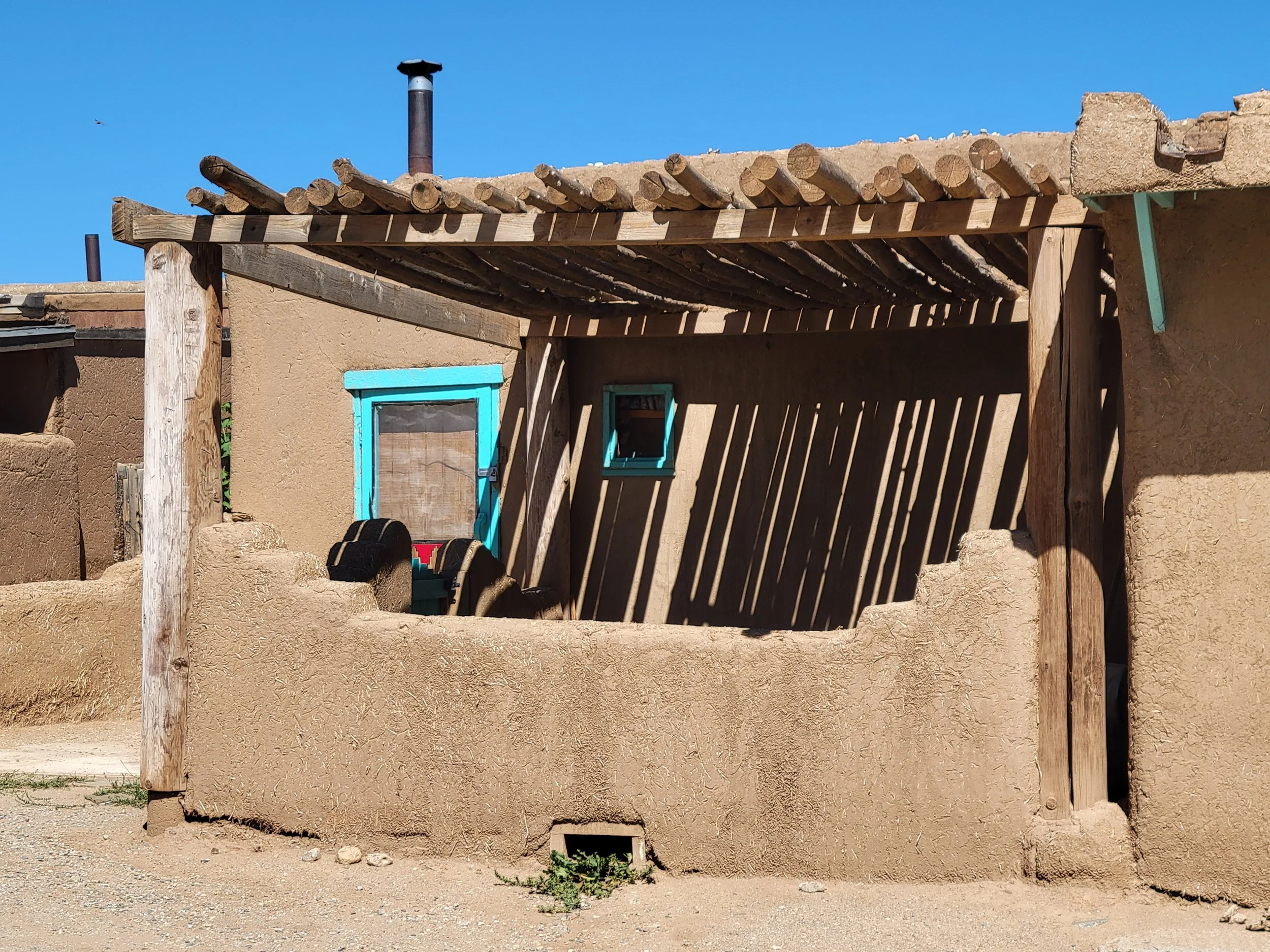
If you spend enough time walking the older neighborhoods of Santa Fe or the villages of northern New Mexico, you begin to notice the turquoise doors.
At first they seem purely aesthetic — vivid against adobe walls the color of cinnamon and dust. Photographers love them. Visitors remember them. But like so much in New Mexico, the color carries layers of history beneath its beauty.
The tradition may reach back through Spain into the older Moorish world of North Africa and the Mediterranean, where blue doors and window frames were believed to offer spiritual protection. In folk belief, blue represented water or sky — barriers that harmful spirits could not cross.
When these traditions arrived in New Mexico, they encountered another culture in which turquoise already held profound meaning. For many Pueblo and Navajo communities, turquoise was not simply decorative stone, but a sacred connection between earth and sky, protection and life.
Over centuries, those meanings seem to have blended.
For Spanish families, blue also carried associations with the Virgin Mary and divine protection. For Native communities, turquoise evoked spiritual balance and the breath of life. Somewhere in that long coexistence, the turquoise door became distinctly New Mexican — neither entirely Spanish nor entirely Indigenous, but something created here.
There were practical meanings too. In small villages, a brightly painted door could signal hospitality: a household prepared to welcome guests for a feast day, baptism, or gathering.
Even today, the color still feels appropriate to the high desert. Against adobe walls and an enormous sky, those doors seem less like decoration than small portals of coolness, shelter, and welcome.