Gerald Cassidy: The Artist Who Came to Heal—and Helped Define Santa Fe
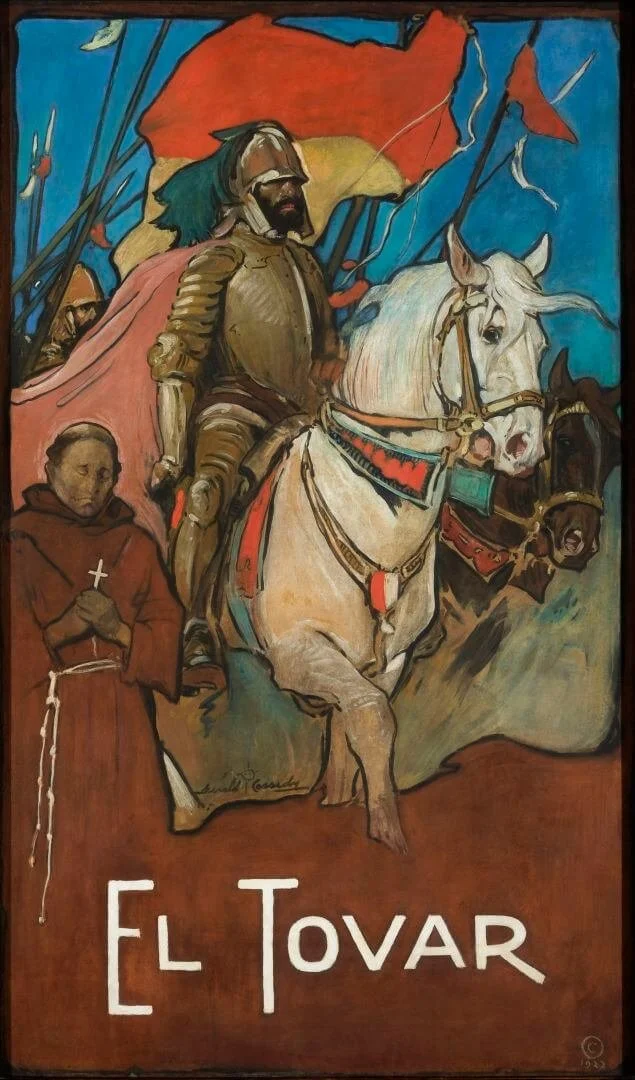
Visitors stepping into the lobby of La Fonda on the Plaza often admire the striking paintings by Gerald Cassidy without realizing that his life story is woven into the very history of Santa Fe itself. The paintings are more than decoration; they are reminders of one of the artists who helped establish Santa Fe as an internationally known art center.
Like many early residents of New Mexico, Cassidy first came west seeking health rather than inspiration. Stricken with tuberculosis at a time when no effective cure existed, he was sent to New Mexico for the dry air and sunshine that physicians believed could restore damaged lungs. What began as a search for healing became a lifelong attachment to the Southwest. After recovering, he settled permanently in Santa Fe in 1912 and quickly became one of the leading figures of the growing art colony.
Cassidy arrived at a pivotal moment. Archaeologist and educator Edgar Lee Hewett was promoting Santa Fe as a cultural center, attracting artists, writers, and scholars from across the country. Cassidy's powerful images of Pueblo life, Native dancers, and Southwestern landscapes helped shape the visual identity that visitors still associate with New Mexico today. His work earned national recognition, including a gold medal at the 1915 Panama-California Exposition.
The paintings at La Fonda were commissioned in the 1920s by the Santa Fe Railway to promote tourism throughout the Southwest. Restored and displayed throughout the hotel, they continue to introduce visitors to the region much as they did a century ago.
Cassidy's story mirrors Santa Fe's own transformation: a remote mountain town that drew tuberculosis patients, dreamers, and artists—and became one of America's most distinctive cultural capitals.