The CCC: Roosevelt’s “Tree Army” and the Making of Modern America
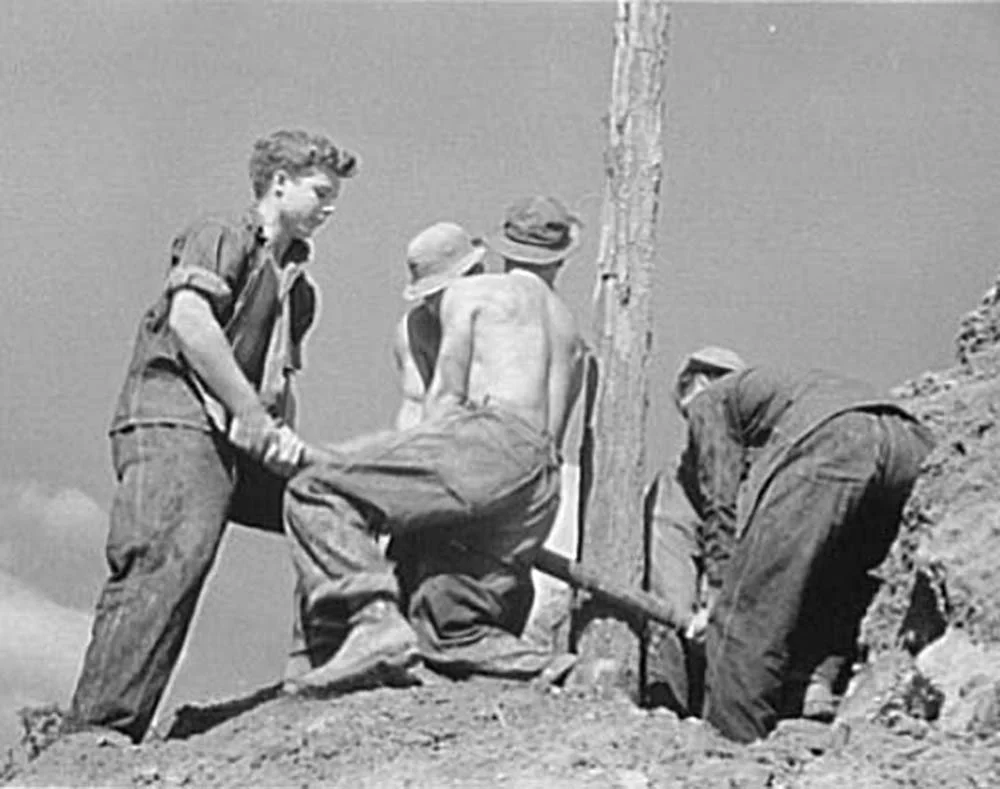
During the darkest years of the Great Depression, when banks failed, farms blew away, and millions of Americans could not find work, one of the most successful and beloved programs in American history emerged almost overnight. The Civilian Conservation Corps — the CCC — put young men to work restoring forests, building parks, reclaiming damaged land, and in many cases restoring their own confidence and health along the way.
For many Americans today, the CCC survives mostly as a mysterious set of stone buildings in a national park, a rustic bridge in a forest, or perhaps the handsome Pueblo Revival structures at Bandelier National Monument. But the true scale of the program is astonishing. In just nine years, from 1933 to 1942, the CCC reshaped both the American landscape and the lives of the young men who served in what President Franklin Roosevelt proudly called his “Tree Army.”
The program began in crisis. By 1933, nearly one quarter of the American workforce was unemployed. Young men were particularly vulnerable. Thousands wandered the country looking for work. Many families could barely feed their children. At the same time, America’s forests had been heavily logged, rivers eroded, farmland exhausted, and the Dust Bowl was beginning to strip the Great Plains of its topsoil.
Roosevelt proposed an ambitious solution: employ young men in conservation work while simultaneously sending money home to struggling families.
The CCC moved with extraordinary speed. Congress approved the program in March 1933. Within months, camps were appearing across the country. Eventually more than 2,600 camps operated in every state and territory.
The enrollees were generally unmarried men between the ages of 18 and 25, though the age limits later expanded somewhat. At first, recruits had to demonstrate financial need. They also had to pass basic physical examinations. The standards could seem surprisingly strict today. Camp doctors inspected eyesight, posture, nutrition, teeth, and general physical condition. Men severely underweight or suffering from chronic illness could be rejected. Some camps reportedly required a minimum weight proportional to height, and dental problems were noted carefully because poor teeth often reflected deep poverty and malnutrition.
Yet many recruits arrived in remarkably rough condition. Contemporary reports describe boys thin from hunger, exhausted from odd jobs and drifting travel, and unfamiliar with regular medical care. The CCC often transformed them physically within months. They received steady meals, medical attention, clean clothing, exercise, and routine.
The pay sounded modest even then: thirty dollars a month. But twenty-five dollars was usually sent directly home to parents or dependents. In thousands of struggling households, that dependable check became a lifeline. The young men themselves retained only five dollars a month for personal spending, but many later said they felt pride for the first time in helping support their families.
The camps themselves were run with military efficiency, though the CCC was technically a civilian organization. Army officers handled logistics, housing, food, and discipline, while the actual conservation work was supervised by agencies such as the Forest Service, National Park Service, Soil Conservation Service, and Bureau of Indian Affairs.
Life in camp followed a strict routine. Reveille came early. Men slept in barracks, ate in mess halls, and traveled to work sites in trucks. The labor could be hard and dangerous: fighting forest fires, blasting roads through mountains, building trails, constructing dams, planting trees, or controlling erosion under brutal summer heat and winter cold.
But camp life also brought camaraderie and structure many recruits had never known. Baseball teams formed. Camp newspapers appeared. Boxing matches, dances, and music nights became common. Some camps developed theater groups and orchestras. Others taught woodworking, blacksmithing, masonry, photography, or drafting.
Education became one of the program’s quiet triumphs.
Thousands of enrollees entered the CCC with limited schooling. Some were functionally illiterate. Evening classes offered instruction in reading, arithmetic, typing, mechanics, and vocational trades. More than 40,000 men reportedly learned to read and write while in the program. Others earned high school equivalency certificates or gained technical skills that later helped them find stable employment.
The experience often proved deeply transformative. Many former CCC members later described the camps as the place where they first encountered libraries, music, travel, organized teamwork, or even three full meals a day.
Meanwhile, the work itself changed the American landscape on a monumental scale.
The CCC planted an estimated three billion trees across the nation, helping reforest vast areas devastated by logging and wildfire. They built more than 125,000 miles of roads and trails. They installed thousands of bridges, campgrounds, ranger stations, picnic areas, and fire towers. They helped develop or improve hundreds of state parks and national parks that Americans still use today.
In the Great Plains, CCC crews fought the Dust Bowl catastrophe directly. They planted immense shelterbelts — long rows of trees stretching across prairie states — intended to slow the winds that carried topsoil away in black clouds. They stabilized stream banks, controlled erosion, and restored damaged grazing lands.
The scope of reclamation remains almost difficult to imagine. CCC workers dug reservoirs, improved wildlife habitats, stocked streams with fish, battled insect infestations in forests, and constructed flood-control systems. Much of the rustic park architecture Americans now associate with national and state parks — stone walls, timber lodges, carefully fitted trails, and harmoniously designed visitor centers — came directly from CCC labor.
At places like Bandelier National Monument, the craftsmanship remains one of the finest visible legacies of the program. The beautiful Pueblo Revival visitor center and surrounding historic district were built by CCC workers using local materials and traditional regional forms. Across the Southwest, CCC crews constructed buildings so durable and aesthetically sensitive that they now appear timeless, as though they emerged naturally from the landscape itself.
The numbers remain staggering for a program that lasted barely nine years. Roughly three million young men served in the CCC between 1933 and 1942. The program operated during an emergency, but its effects endured for generations.
Many veterans of the CCC later served in World War II, bringing with them physical conditioning, practical skills, and experience living and working in organized groups. Military officials often noted that former CCC enrollees adapted especially well to army life.
The program ended largely because the Depression itself gave way to wartime mobilization. By 1942, factories and military service were absorbing the nation’s unemployed young men. Congress dissolved the CCC that year.
Yet the legacy remained everywhere.
Americans still drive roads they built, camp in parks they improved, hike trails they carved, and admire structures they constructed nearly a century ago. Entire state park systems owe much of their early development to CCC labor. In the Southwest especially, many beloved public buildings, trails, picnic grounds, and scenic overlooks date directly to the program.
But perhaps the greatest achievement of the CCC was not merely environmental restoration. It was human restoration.
At a moment when millions feared the nation itself might be collapsing, the CCC gave young men purpose, discipline, wages, education, health, and dignity. It demonstrated that public works could serve both the land and the people living upon it.
That combination of practical labor, conservation, and human uplift helps explain why the CCC remains one of the most admired programs of the New Deal era. Nearly a century later, its work still stands quietly across the American landscape — in forests, parks, trails, bridges, and buildings — as enduring evidence of what collective effort once accomplished in a time of national hardship.