Santa Fe Fiesta: An Old Tradition Reinvented
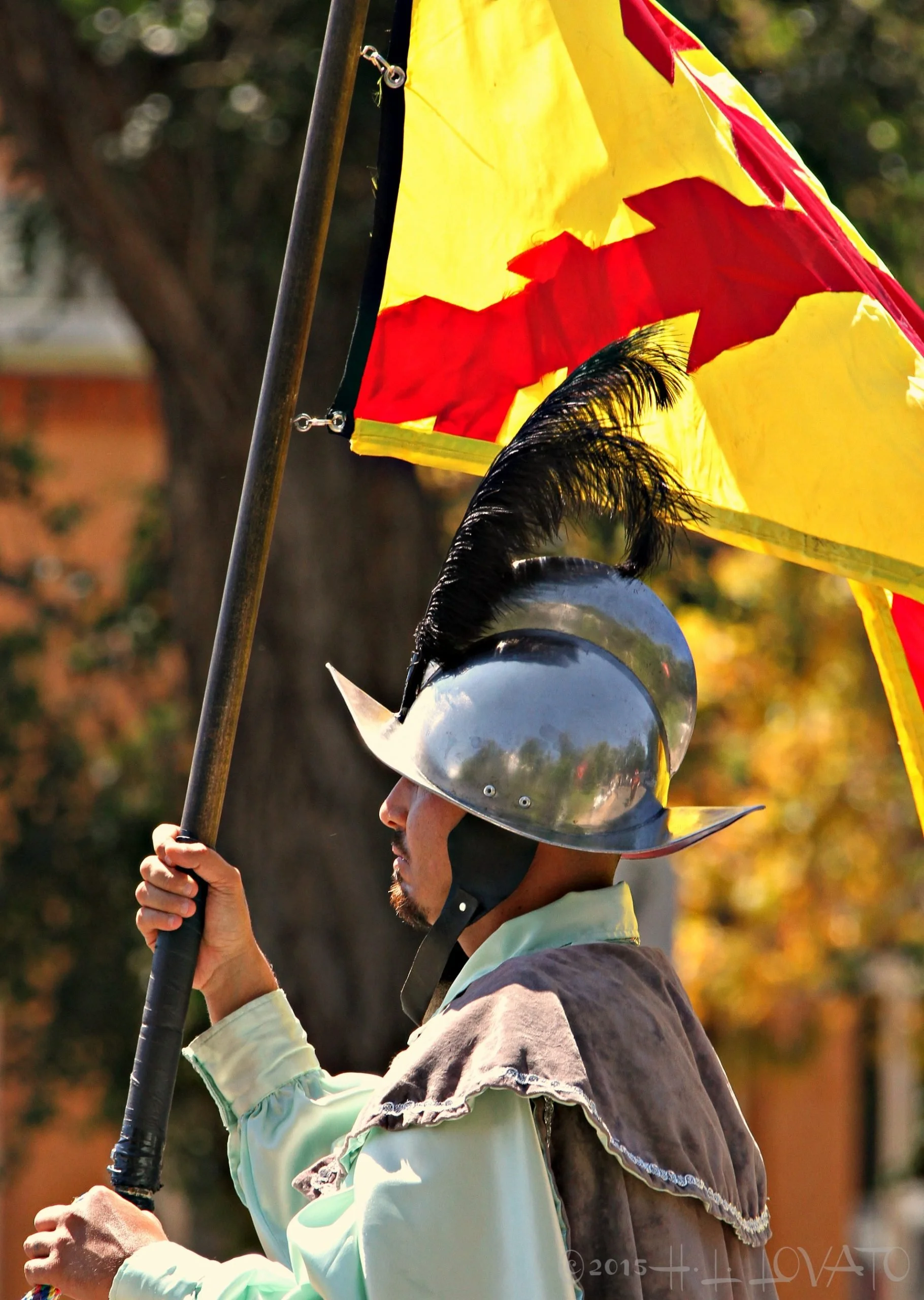
¡Que viva la Fiesta!
Each September, Santa Fe comes alive with parades, music, dancing, food, religious observances—and, of course, the burning of Zozobra.
Fiesta is often described as one of the oldest community celebrations in the United States. Its origins reach back more than three centuries. Yet the Fiesta we know today is not simply an ancient celebration that has continued unchanged since Spanish colonial times.
Like so much of Santa Fe, Fiesta is both old and new—a tradition repeatedly reshaped by the generations that inherited it.
The Origins of Fiesta
The story traditionally begins with the Pueblo Revolt of 1680.
That extraordinary uprising drove the Spanish colonists from New Mexico, ending nearly a century of Spanish rule. For twelve years, the Spanish lived in exile in El Paso del Norte, now Ciudad Juárez.
In 1692, Governor Don Diego de Vargas returned to New Mexico and reentered Santa Fe. The following year, however, Pueblo resistance continued, and the Spanish returned with military force to reestablish their control over the region.
The story of the Reconquest became closely associated with La Conquistadora, the small wooden statue of the Virgin Mary that had been brought to New Mexico in the early seventeenth century and carried into exile following the Pueblo Revolt.
In 1712, Santa Fe officials issued a proclamation establishing an annual religious observance commemorating the events surrounding the Spanish return. The celebration included Mass, vespers, a sermon, and a public procession.
And that is the traditional beginning of Fiesta.
But there is an important historical qualification.
We do not know that the celebration continued uninterrupted from 1712 onward. Documentary evidence becomes thin, and at some point the annual observance faded away. By the early twentieth century, Santa Fe's civic leaders and residents were once again looking for ways to celebrate—and define—the history of their city.
A Fiesta for a New State
The timing was significant.
New Mexico became the forty-seventh state in 1912. Santa Fe was entering a period of remarkable change. Railroads and modern commerce had connected the city to the rest of the country, while artists, writers, archaeologists, architects, and preservationists were discovering—or rediscovering—what made Santa Fe different.
There was a growing conviction that Santa Fe should not simply become another modern American city.
Its history and distinctive cultural character could become its greatest assets.
Early twentieth-century pageants began celebrating episodes from Santa Fe history. By 1919, the effort to revive Fiesta had gathered momentum, and the celebration began taking the form that would eventually become familiar to modern Santa Feans.
Among the important figures shaping this new Fiesta was Edgar Lee Hewett.
Edgar Hewett and the Making of Modern Santa Fe
Hewett was an archaeologist, educator, preservationist, and institution builder. He founded the School of American Archaeology—today's School for Advanced Research—and played a central role in creating the Museum of New Mexico.
But Hewett was also something more.
He was one of the architects of the twentieth-century idea of Santa Fe.
During the 1920s, while serving as president of the Fiesta Council, Hewett helped shape the celebration into a broad historical pageant. Fiesta became an opportunity to present a story of New Mexico extending from its Indigenous past through the Spanish and Mexican periods and into the American era.
This vision helped create the Santa Fe that visitors recognize today.
But it was also selective.
Whose history should be celebrated? Which stories should be emphasized? And who had the authority to tell them?
Those questions were present from the beginning and remain part of the conversation surrounding Fiesta today.
Recent scholars examining Hewett's legacy have described his role in shaping a powerful public mythology of New Mexico—a vision in which Indigenous, Hispanic, and Anglo traditions were presented together as the foundation of the state's cultural identity.
That vision was enormously influential.
It also simplified a far more complicated history.
A Celebration—and a Contested History
The history behind Fiesta is not experienced in the same way by everyone.
For generations of Hispanic New Mexicans, Fiesta has been an important celebration of community, faith, family, and cultural continuity.
But the traditional story of the Reconquest tells a different story from the perspective of the Pueblo peoples.
The Pueblo Revolt was one of the most successful Indigenous uprisings in North American history. The subsequent Spanish return represented the restoration of colonial rule, and the events of the Reconquest were far more complicated—and more violent—than the older story of a peaceful return sometimes suggested.
That history has led to continuing debate about the meaning of Fiesta and the way the Reconquest is commemorated.
Perhaps that should not surprise us.
Fiesta has always been about history—and history is rarely as simple as a parade.
Enter the Artists
While Hewett and Santa Fe's civic leaders were helping revive and reshape the official Fiesta, another group was creating its own version of Santa Fe culture.
The city's growing art colony was bringing together painters, writers, and other creative spirits who were attracted to the Southwest and determined to make Santa Fe their home.
Among them was Will Shuster, known as “Shus,” and his friends among the group called Los Cinco Pintores—the Five Painters.
Their contribution to Fiesta was not solemn historical pageantry.
It was a giant monster.
As we explored in our recent story about the origins of Zozobra, Shuster created Old Man Gloom in 1924 as part ritual, part theater, and part artistic prank.
When the official Fiesta initially showed little enthusiasm for his creation, Shuster and his friends organized their own irreverent counter-celebration.
They called it El Pasatiempo.
There were absurd parades, theatrical events, and eventually the burning of Zozobra.
And then something remarkable happened.
Santa Fe embraced it.
The artists' invention eventually became part of Fiesta itself.
When an Invented Tradition Becomes Real
That may be the most fascinating thing about Santa Fe Fiesta.
Its roots reach back to Spanish colonial New Mexico. Its religious traditions remain important. Its history is deeply connected to generations of Hispanic Santa Fe families.
But the modern Fiesta was also reshaped during the early twentieth century.
Civic leaders revived it. Edgar Lee Hewett and others expanded its historical vision. Artists added irreverence, theater, and Zozobra. New events and traditions appeared over time.
And eventually, the new traditions became old traditions.
Today, Fiesta is many things at once.
It is a religious celebration.
It is a gathering of families and old friends.
It is music, food, parades, processions, and pageantry.
It is a celebration of Hispanic culture and heritage.
It is also an annual reminder that Santa Fe's history is complex—and that the stories we tell about the past continue to matter.
Perhaps that is why Fiesta has endured.
It has never stood still.
Each generation has inherited the celebration, argued about it, added something new, and passed it along again.
That may be the real tradition.
¡Que viva la Fiesta!