Two Ways of Seeing the Same Land
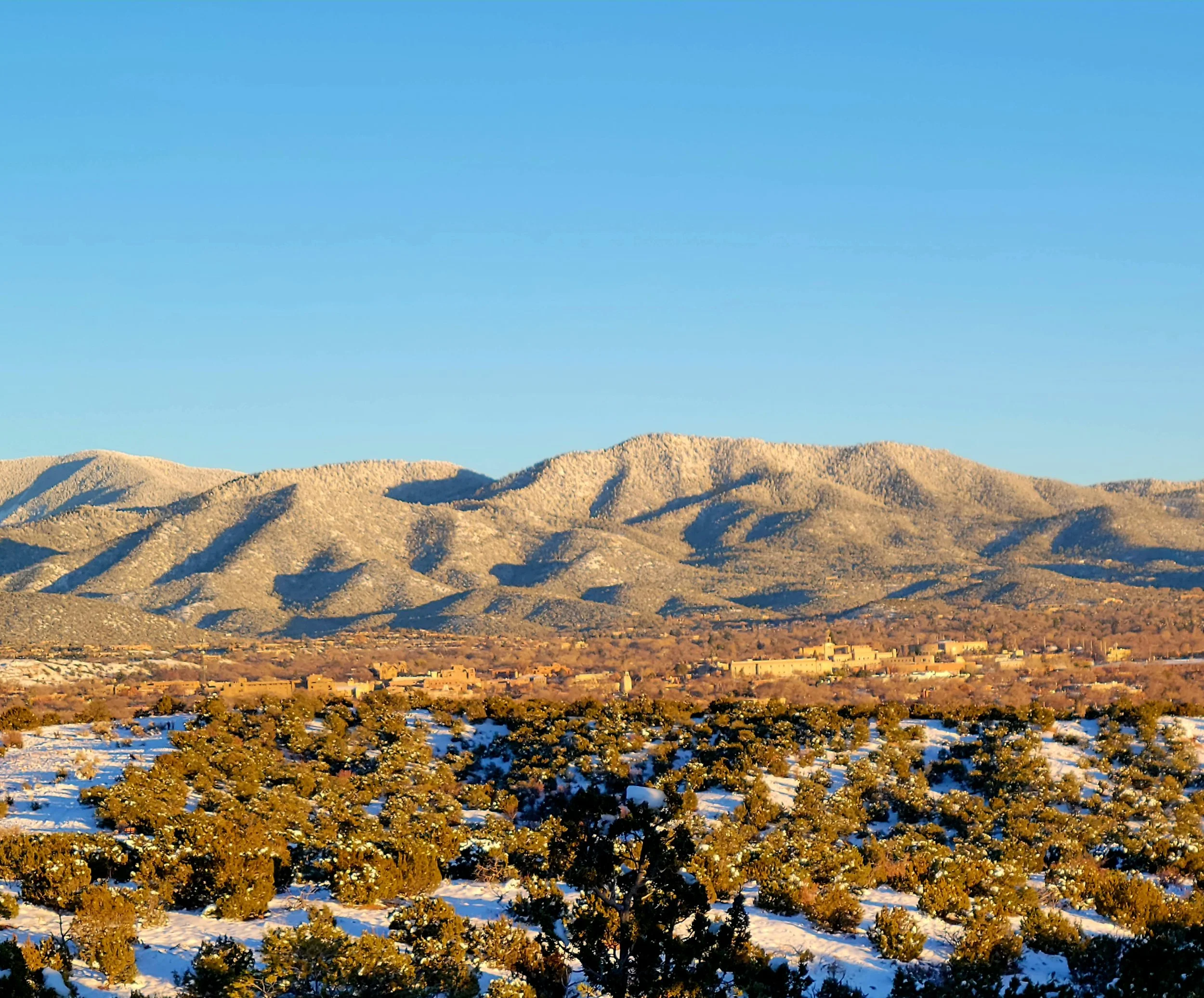
Visitors to New Mexico often notice the dramatic contrasts first: adobe pueblos beside Spanish churches, Indigenous pottery beside Catholic saints, ancient cornfields beneath European-style plazas. But beneath these visible differences lay something even deeper — two very different ways of understanding the world itself.
For the Pueblo peoples, the land was not simply property or wilderness. It was alive with sacred meaning. Mountains, rivers, storms, animals, and the cycles of planting and harvest were woven into a spiritual relationship that emphasized balance, reciprocity, and continuity. Human beings were understood as participants within a larger living order, carrying responsibilities to community, ancestors, and place.
The Spanish colonists who entered the Rio Grande Valley in the late sixteenth century brought a different worldview. Shaped by European monarchy, Catholic Christianity, and imperial expansion, they often saw land as something that could be claimed, governed, converted, and economically developed. Authority flowed downward from king, governor, and priest. Religion existed within formal institutions — churches, missions, and doctrine — in ways that differed sharply from Pueblo ceremonial life, where spirituality was inseparable from daily existence.
These differences shaped nearly every aspect of colonial New Mexico. The Spanish established missions while Pueblo communities maintained ceremonial traditions. The newcomers introduced livestock, new farming methods, and systems of taxation and labor. Pueblo people often adapted creatively while also resisting pressures that threatened their cultural and spiritual survival.
The resulting history was neither simple conflict nor simple blending. It was a long, uneasy encounter between two civilizations trying to inhabit the same extraordinary landscape.
Even today, New Mexico still reflects this meeting of worlds. Its architecture, ceremonies, food, languages, and communities all carry traces of that encounter. To travel here thoughtfully is to recognize that the Southwest was shaped not only by battles and borders, but by profoundly different ideas about land, spirit, authority, and humanity’s place within the natural world.